
“Will the weather clear up at the Gullfaks field?”

At 7:00 AM, the morning meeting begins on Gullfaks A. About twenty people are gathered in a large meeting room onboard the platform. The rest of the participants follow via Teams from their own offices or from a meeting room in their respective departments.
During the 10–15-minute meeting, the most important updates are delivered. What is the status onboard? Has anything happened overnight that the day shift should be aware of? Are there any changes that need to be communicated to everyone? Has there been any significant news regarding Equinor that people should be informed about?
Perhaps there are other news items that it is also useful for the staff to be aware of?
As the meeting draws to a close, the head of safety shares a reminder about safety, and then a brief weather update is given.
How much wind will there be? How many degrees will it be? Will it be sunny, overcast, or possibly foggy? Has the weather changed from what was predicted yesterday?
Or, to put it another way: Will the helicopters be able to fly, and can the work proceed as planned?
When the weather halts work
Most goods sent to and from the platforms offshore are transported by ship. The weather needs to be severe before the ships can’t sail, but it can still play a role when goods are being loaded or unloaded between the platform and the ship. Wave height is also a factor.[REMOVE]Fotnote: “The challenges with loading and unloading ships are one of the topics in episode 6 of the NRK series Oljeriket from 2005. https://tv.nrk.no/serie/oljeriket/sesong/1/episode/PRHO97000604 Downloaded on August 16, 2024.”
High up in the crane, the crane operator is tasked with lifting heavy containers up and down. From their position in the crane, people onboard the ships appear as tiny figures, and in thick fog, it can be impossible to see them at all. Under such conditions, goods cannot be moved.
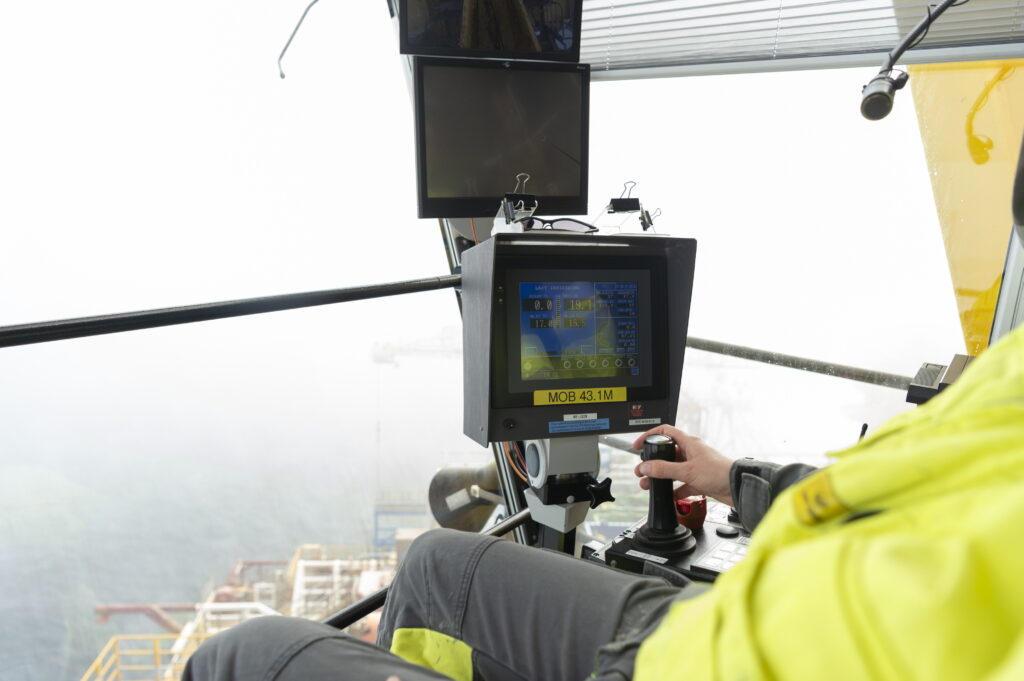
Strong winds can also make work challenging and dangerous.
In adverse weather conditions, the only option is to wait until the fog lifts and the wind dies down.
Waiting is common for those working offshore. They wait for the waves to calm down so they can work on the lower drilling decks, wait for oil to be loaded, for cranes to be used, and for helicopters to depart – just to name a few.
Helicopter traffic and power production
“I never schedule plans for the day after I’m supposed to head home. There needs to be some flexibility in case the helicopter is delayed,” says Yngvar Nåmdal, who works in electronics on Gullfaks A.[REMOVE]Fotnote: Yngvar Nåmdal in conversation with Julia Stangeland, Shadé B. Martins and Ole Kvadsheim on Gullfaks A, June 27, 2024.
According to several employees at Gullfaks A, fog is a common issue in the Tampen area where the Gullfaks field is located.
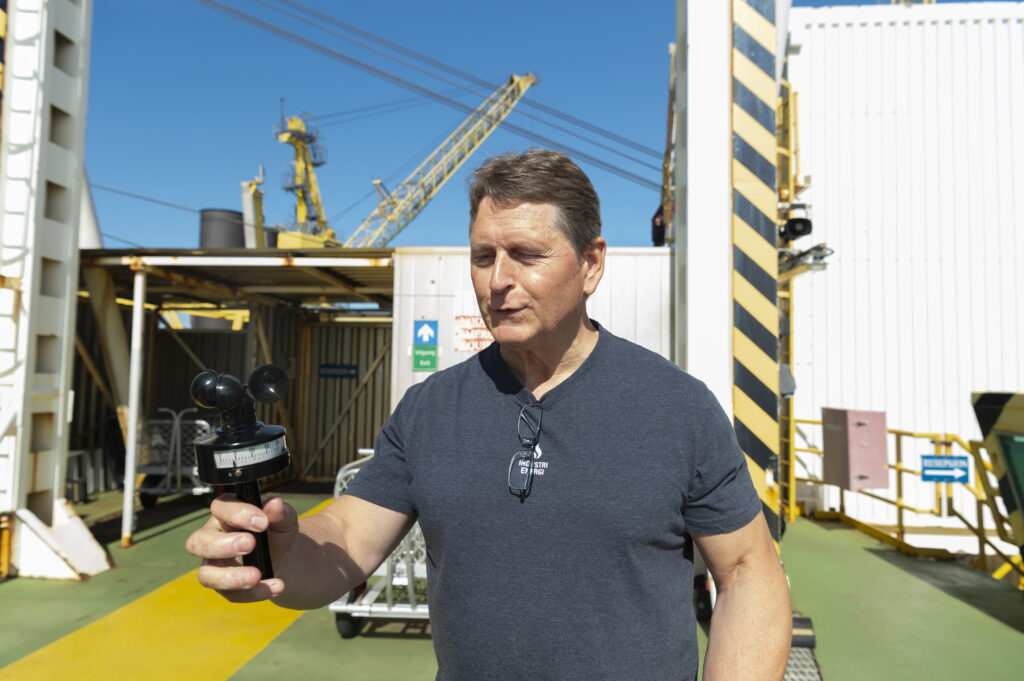
When the fog is thick, Helicopter Landing Officer (HLO) Tor Gunnar “Tolle” Groven and his assistant, Tommy Skjølingstad, onboard Gullfaks A, are like two surgeons before a major operation. They cannot guarantee the outcome. The helicopter will eventually come, but they cannot say exactly when.[REMOVE]Fotnote: Tor Gunnar “Tolle” Groven and Tommy Skjølingstad in conversation with Julia Stangeland, Shadé B. Martins, and Ole Kvadsheim on Gullfaks A, June 27, 2024.
Other factors that can prevent helicopter traffic include wave height (since the helicopter needs to be able to make an emergency landing safely on the sea), wind, and static activity (thunderstorms) in the air.
Being stuck on one of the Gullfaks platforms when you were supposed to go home can be inconvenient, but when the helicopter can’t fly, it can have much more serious consequences in the case of injury or illness.
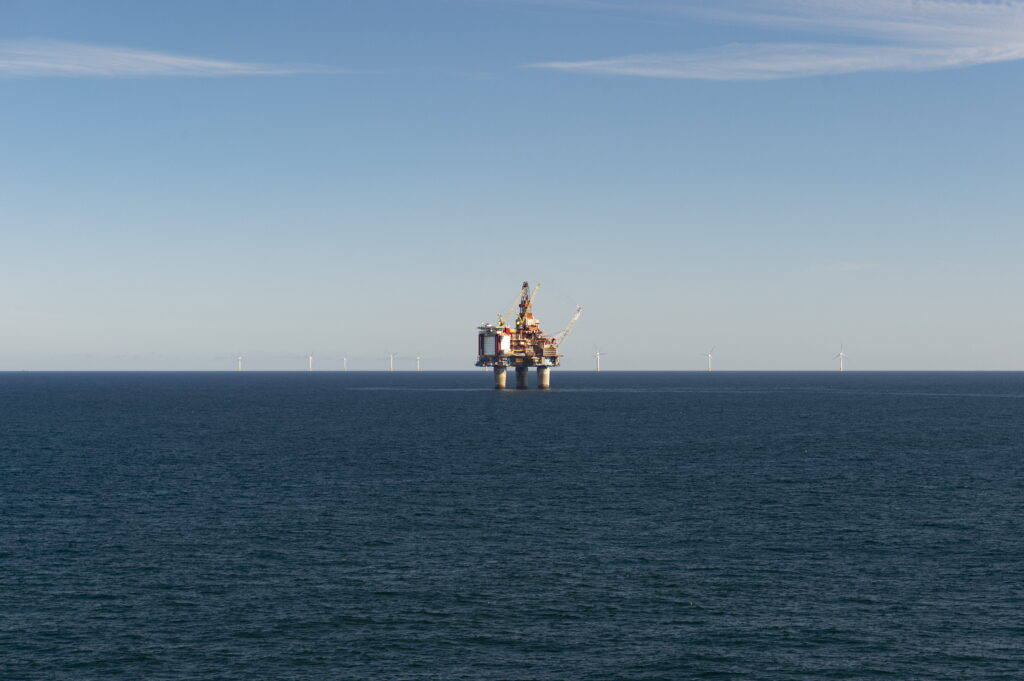
It’s easy to think that calm weather with little wind is ideal offshore, but since the start of Hywind Tampen, it is beneficial to have enough wind to shut down one or more of the gas generators.
When the weather plays such a significant role, it’s no wonder it becomes a topic at more than one meeting onboard. One of the questions, especially from those who are soon to go home, is: “Will the weather clear up at the Gullfaks field?”