
Tragedy at Turøy

The helicopter, an Airbus Helicopters EC 225 Super Puma registered LN-OJF, suddenly and without warning lost its main rotor. Moments later, it plummeted 640 meters to the ground. All 13 people on board died instantly. The rotor continued on its own and landed on a neighboring island approximately 550 meters away.
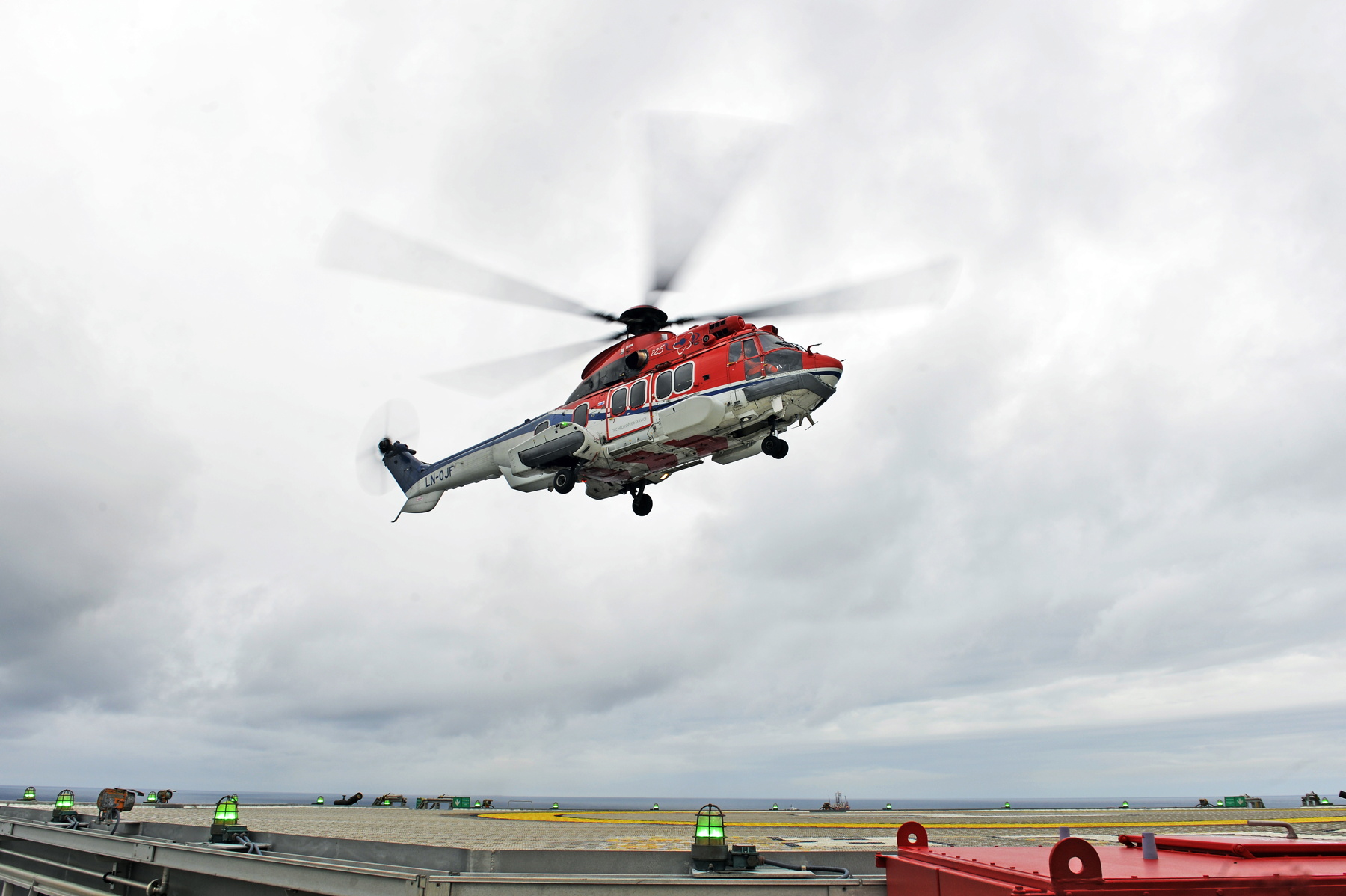
Everything appeared normal during the flight from Gullfaks, and the pilots received no warning before the rotor detached. The Accident Investigation Board Norway (AIBN) concluded in its 2018 report (2018/04) that the pilots could not have prevented the accident, and their actions had no impact on the outcome.[REMOVE]Fotnote: Statens havarikommisjon for transport (2018). Sammendragsrapport om luftfartsulykke nær turøy, øygarden kommune i Hordaland 29. April 2016 med airbus helicopters ec 225 lp, ln-ojf, operert av chc helikopter service as. Rapport SL 2018/04. https://havarikommisjonen.no/Luftfart/Avgitte-rapporter/2018-04.
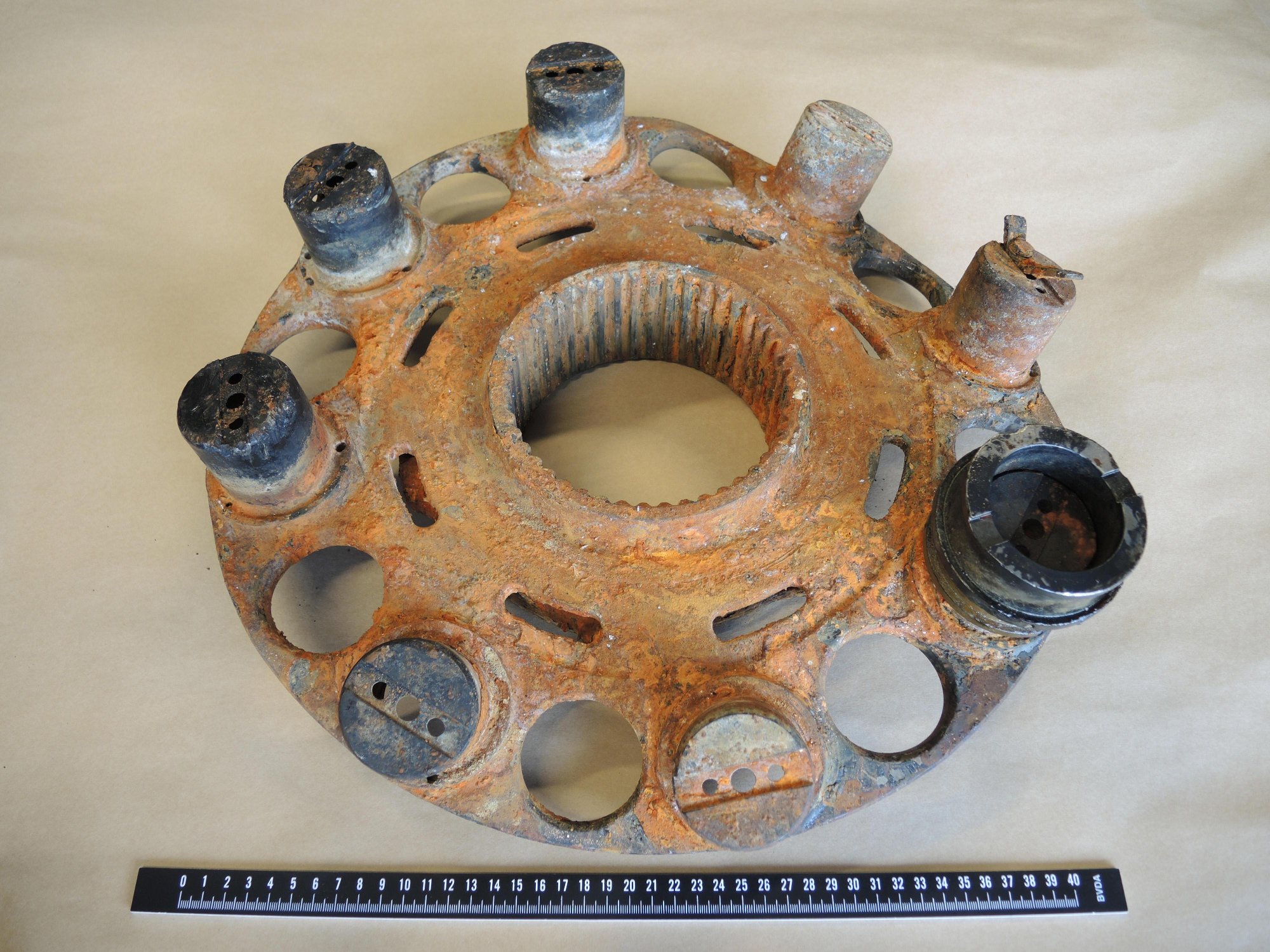
CHC Helikopter Service operated the helicopter on behalf of Statoil and lost two pilots in the crash. The remaining victims were employees of six different companies. The direct cause was a fracture in one of eight second-stage planetary gears in the main gearbox[REMOVE]Fotnote: A planetary gear is a mechanism for altering rotational transmission, in which planet gears revolve around a central sun gear.
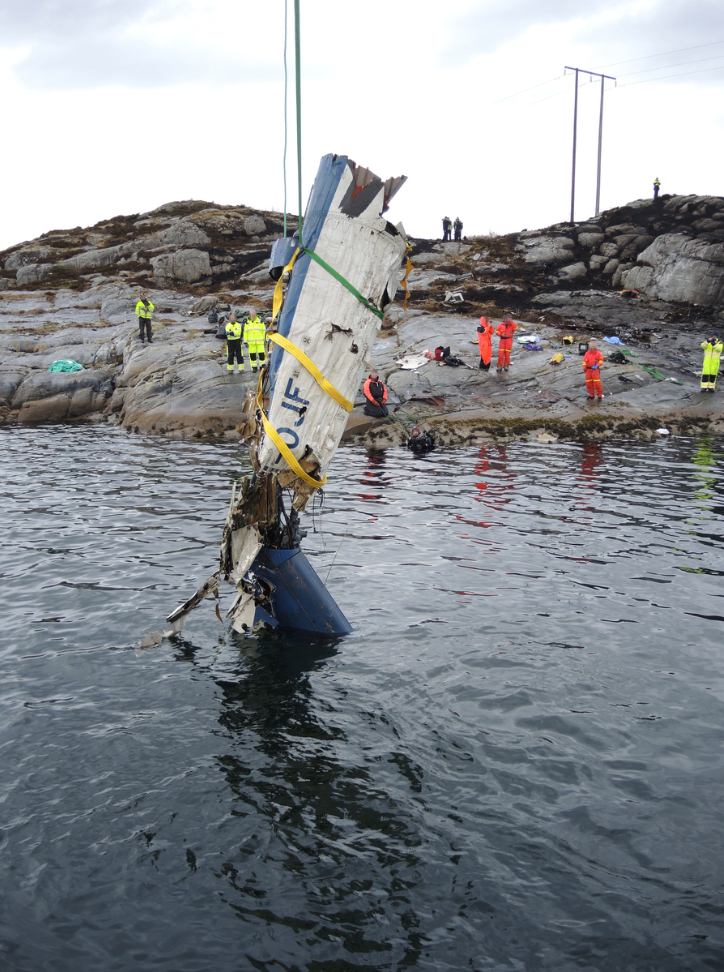
The crack originated from a small surface defect and developed undetected until catastrophic failure. The AIBN found no evidence of maintenance errors contributing to the accident, stating: “The failure developed in a way that was difficult to detect.”[REMOVE]Fotnote: Statens havarikommisjon for transport (2018). Sammendragsrapport om luftfartsulykke nær turøy, øygarden kommune i Hordaland 29. April 2016 med airbus helicopters ec 225 lp, ln-ojf, operert av chc helikopter service as. Rapport SL 2018/04. https://havarikommisjonen.no/Luftfart/Avgitte-rapporter/2018-04.
The helicopter’s Achilles’ heel
The main gearbox drives the tail rotor, oil pumps, generators, and hydraulic systems. It also anchors the main rotor, transferring all rotor loads to the fuselage. A technical failure in this component is among the most serious alarms a helicopter pilot can receive.
An Unpopular Aircraft
The Super Puma helicopter type had long been unpopular among offshore workers.[REMOVE]Fotnote: Honningøy, Kristi Haga. (2016. 29. april) – Et veldig upopulært helikopter blant de ansatte i Nordsjøen.NRK. – Et veldig upopulært helikopter blant de ansatte i Nordsjøen – NRK Norge – Oversikt over nyheter fra ulike deler av landet They were cramped, uncomfortable, and regarded as outdated. Worst of all, the helicopter type had been involved in several accidents in recent years. In addition, came the Norne accident in Norway in 1997, which claimed twelve lives; that too involved a Super Puma, albeit an older variant. The Norne accident remained vivid in the memory of many who traveled by helicopter to and from the platforms.
The Turøy accident bore clear similarities to several earlier accidents.
On the UK continental shelf, there had been five serious Super Puma accidents between 2009 and 2016, two of them fatal, with a total of 20 fatalities. Three of the accidents were caused by gearbox problems, including the Peterhead accident on 1 April 2009, which claimed 16 lives. On that occasion, the pilots received a brief warning that something was wrong: an alarm indicated that the helicopter was losing oil pressure in the main gearbox. Twenty seconds after the alarm sounded, the rotor separated from the helicopter body and severed the tail boom. The helicopter then fell 650 meters straight down toward the sea surface with 16 people on board.[REMOVE]Fotnote: Department for Transport. (2011, februar). Report on the accident to Aerospatiale (Eurocopter) AS332 L2 Super Puma, registration G-REDL 11 nm NE of Peterhead, Scotland on 1 April 2009. https://assets.publishing.service.gov.uk/media/5422f86aed915d13710006cb/2-2011_G-REDL.pdf
In May 2012, a Super Puma was forced to make an emergency landing in the North Sea east of Aberdeen, and in October the same year another Super Puma made an emergency landing off the coast of the Shetland Islands. Following these two incidents, 52 helicopters were grounded pending an investigation into the causes of the emergency landings. It turned out that both helicopters had suffered main gearbox failures with cracks in the same location on the shaft. The helicopter type was taken out of service for nine months.[REMOVE]Fotnote: Dalløkken. Per Erlien. (2016.29. april). I 2012 ble Super Puma satt på bakken og utbedret. Norsk turbindesigner advarte mot løsningen. Teknisk Ukeblad. I 2012 ble Super Puma satt på bakken og utbedret. Norsk turbindesigner advarte mot løsningen | Tu.no
Compensation
It took a full five years after the Turøy accident before the bereaved families received compensation. At that point, a settlement was reached between all the bereaved and Airbus. The settlement is confidential, and the amount remains unknown.[REMOVE]Fotnote: Sindre Vik Helgheim, Christian Skaar Lura. (2021. 4. juni). Etterlatte etter Turøy-ulykken inngikk forlik med Airbus – får hemmelig sum. NRK.
The investigation of the accident was time-consuming. After several interim reports, the Accident Investigation Board presented its final conclusion in July 2018. However, already in 2017 Airbus admitted that safety measures could have been implemented that might have prevented the accident.[REMOVE]Fotnote: NRK. (2017. 27. april). Airbus innrømmer at Turøy-ulykken kunne vært unngått The helicopter crash most likely occurred because of the same mechanical wear defect that caused the Peterhead accident. As early as that time, 17 recommendations were issued regarding safety and maintenance measures for this helicopter model, but the recommendations from the British accident investigation authority were not followed up adequately.
The EU aviation safety agency EASA (European Aviation Safety Agency) allowed flights with the Super Puma before the Accident Investigation Board had concluded on the cause of the accident. In Norway, the flight ban on the Super Puma was replaced by a special safety directive, which was lifted in 2020.
For Statoil, however, using the Super Puma again was out of the question. Since 2016, Statoil (from 2018 Equinor) used only the Sikorsky S-92 helicopter type for personnel transport and search and rescue services on the Norwegian continental shelf.[REMOVE]Fotnote: Equinor. (2024. 1. mars). Equinor sikrer ny helikopterkapasitet.
Several people expressed concern that helicopter traffic on the Norwegian continental shelf was almost entirely dependent on a single helicopter type – the S-92A, which was not based on the latest technology. The concern centered on the lack of redundancy, or alternatives, should problems arise when there were no longer two different helicopter types in operation.
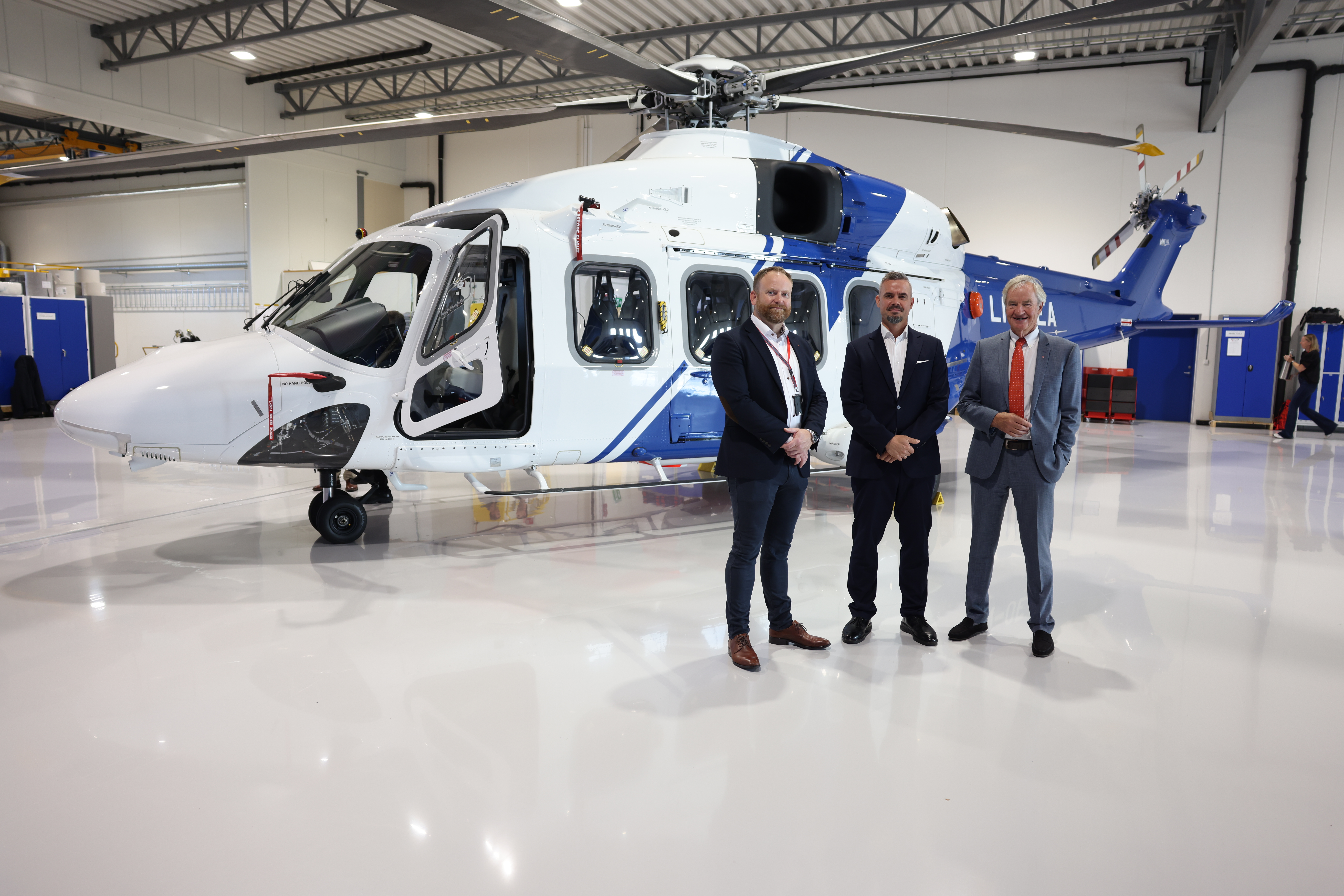
In 2024, Equinor purchased 15 new helicopters from the manufacturers Bell and Leonardo: ten of the Bell 525 type and five of the AW189 type. The helicopters are scheduled to be delivered between 2025 and 2030.[REMOVE]Fotnote: Equinor. (2024. 1. mars). Equinor sikrer ny helikopterkapasitet.
Regulatory Debate and EU Pressure
The Turøy accident sent a strong warning to the entire industry after many years of positive developments in helicopter safety in Norway. At the same time, the debate intensified over the introduction of a pan-European regulatory framework for helicopter operations on the Norwegian continental shelf. The new regulations aimed to replace national rules with a common European standard. Helicopter Offshore Operations (HOFO) was part of the EU’s long-term effort to establish fully harmonized European rules for aviation operations.
Foreign helicopter companies could operate on the Norwegian continental shelf but had to be approved and supervised by Norwegian authorities. The EU required that Norwegian authorities open the Norwegian continental shelf to operators from other countries, and that these operators be supervised by the aviation authority in their home country.
The EU’s push to implement pan-European aviation rules on the Norwegian shelf led to strong protests from both unions and companies. In 2017, Sintef also published a helicopter safety study in which they examined, among other things, the consequences of introducing a new regulatory framework.[REMOVE]Fotnote: Sintef. (2017). Helikoptersikkerhetsstudie 3b. En begrense oppdatering av HSS-3 med fokus på perioden 2010-2015. https://www.sintef.no/publikasjoner/publikasjon/1463027/
The report warned against the HOFO regulations, which would allow the removal of Norwegian-specific safety requirements. This would mean that helicopter companies would no longer need a Norwegian operating license, and supervision would be carried out by the country where the operator was based. This could be a country with low regulatory costs but without a coastline or understanding of how the weather and climate on the Norwegian shelf differ from other regions.
The report concluded that a new regulatory framework that removed or restricted the possibility of Norwegian-specific rules and Norwegian oversight would represent a clear step backward for safety work in Norwegian helicopter operations.[REMOVE]Fotnote: Sintef. (2017). Helikoptersikkerhetsstudie 3b. En begrense oppdatering av HSS-3 med fokus på perioden 2010-2015. s. 100. https://www.sintef.no/publikasjoner/publikasjon/1463027/
When the matter arose in 2017, the Ministry of Transport announced that the then Solberg government’s position was that the parts of the regulation concerning HOFO were not EEA-relevant, since the EEA Agreement did not apply to the continental shelf beyond 12 nautical miles.
In 2024, it emerged that the EU was again pushing for the offshore helicopter traffic regulations (HOFO) to be incorporated into the framework. Legally, Norway continued to argue that since the regulations applied to activities on the shelf, they fell outside the EEA Agreement’s geographical scope.[REMOVE]Fotnote: Stortinget. (2024. 19. januar). Ny strid om helikoptertransport og EØS på norsk sokkel. Ny strid om helikoptertransport og EØS på norsk sokkel? – stortinget.no
A milestone in offshore innovationShould the condeep giants join UNESCO’s World Heritage List?