
Offshore wind before Tampen

Among Norwegian oil companies, Hydro was one of the earliest to show interest in offshore wind, especially the floating variety. As early as 2002, Hydro launched the idea of developing floating offshore wind on the Norwegian continental shelf, under the name Hywind. Initially, the aim was to install a single floating turbine to gain experience and determine whether the technology was viable.
By 2005, the research and demonstration project had taken concrete form: Hydro had decided to deploy the floating turbine off the coast of Karmøy.
There were two main reasons why Karmøy was chosen. First, the waters off Karmøy were unusually deep for a location so close to shore. To remain stable, the floating structure needed a concrete section extending 120 metres below sea level, requiring a seabed depth of at least 200 metres.
Second, Karmøy was strategically located, close to existing shipyards and supplier infrastructure. Hydro applied for NOK 50 million in funding from Enova to build the turbine, which was expected to generate electricity for around 500 households.[REMOVE]
Fotnote: Rosenberg, U. E. (2005, November 9). Hydro vil ha vindmølle i havet utenfor Karmøy. Stavanger Aftenblad, s. 10.
Hywind after the merger
When Hydro’s oil and gas division merged with Statoil in 2007, the Hywind project became part of the newly formed StatoilHydro. At the time, it was far from obvious that oil companies would be involved in offshore power generation. The fact that Hywind was brought into the merged company marked something of a turning point—an implicit recognition that offshore wind had more in common with oil and gas than with other forms of power production, and thus belonged in the same corporate portfolio.[REMOVE]
Fotnote: Boon, M. (2022). En nasjonal kjempe: Statoil og Equinor etter 2001 (s. 334). Universitetsforlaget.
StatoilHydro’s interest in offshore wind began to gain real momentum following the merger.[REMOVE]Fotnote: Boon, M. (2022). En nasjonal kjempe: Statoil og Equinor etter 2001 (s. 332). Universitetsforlaget.As part of the merger, the company’s articles of association were amended to include “…and other forms of energy” in its mission statement.[REMOVE]Fotnote: Boon, M. (2022). En nasjonal kjempe: Statoil og Equinor etter 2001 (s. 328). Universitetsforlaget.
In February 2010, the 5,000-tonne Hywind turbine was deployed off the coast of Karmøy. This was the world’s first floating wind turbine, intended primarily as a testbed for learning about floating wind technology.
In 2015, Statoil reached an agreement with the Scottish government to scale up Hywind by building five similar turbines 25 kilometres off the coast of Peterhead. The goal was to reduce the cost per unit and assess whether the Hywind concept could become more competitive. The turbines were to deliver electricity to the Scottish grid. All were constructed at Stord and towed across the North Sea in the summer of 2017.[REMOVE]
Fotnote: Seglem, E., & Ingemundsen, J. (2017, Oktober 19). Energistatsråden: – Hywind bærer bud om nye norske arbeidsplasser. Stavanger Aftenblad, s. 6-7.
Statoil operated the project and reported that 30 percent of the contracts had gone to Norwegian suppliers.
Representatives from both Scottish and Norwegian governments, including Minister of Petroleum and Energy Terje Søviknes, attended the opening of what became the world’s first floating wind farm.
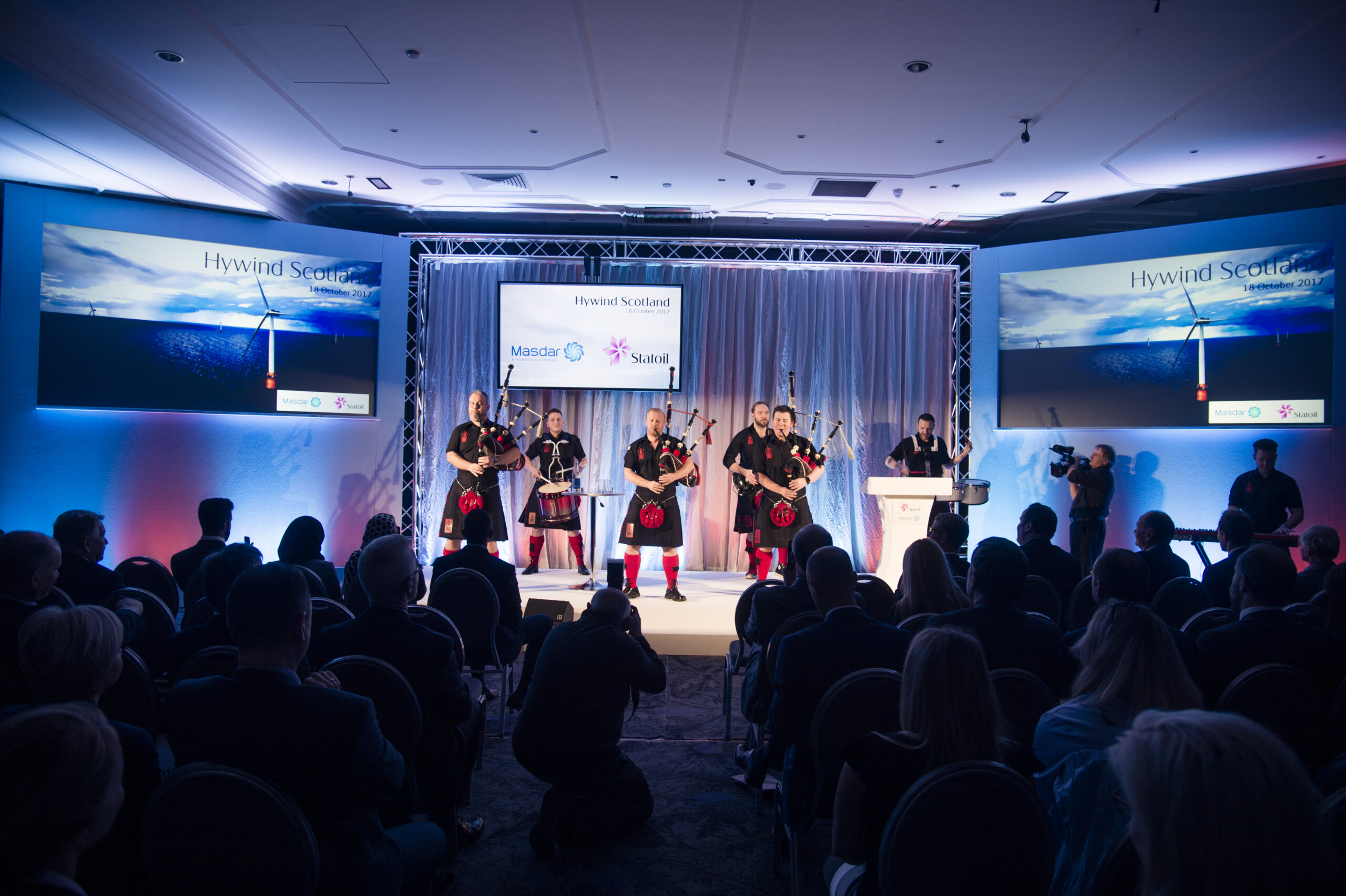
Irene Rummelhoff, head of Statoil’s “New Energy Solutions” business area, stated that the project would be profitable for Statoil—but only because British and Scottish authorities were subsidising parts of it. During the opening ceremony, Terje Søviknes (Progress Party) was asked whether similar projects might be developed in Norway. He, like Statoil, dismissed the idea. Given Norway’s abundant hydropower resources, floating wind was not considered a relevant energy solution at the time.[REMOVE]Fotnote: Seglem, E., & Ingemundsen, J. (2017, Oktober 19). Energistatsråden: “Hywind bærer bud om nye norske arbeidsplasser.” Stavanger Aftenblad, s. 6-7.
Just over a year later, things changed. At the ONS energy conference in 2018, Statoil unveiled the Hywind Tampen project. The aim was to install 11 floating turbines between the Snorre and Gullfaks fields to supply the platforms with electricity. The estimated price tag was NOK 5 billion. On 21 December that same year, Equinor (renamed from Statoil) submitted an application to the Ministry of Petroleum and Energy, after receiving the green light from the seven partners in the Gullfaks and Snorre licenses.
Fixed-bottom offshore wind
Due to the Norwegian Trench, Norway is less well-suited for fixed-bottom offshore wind than countries like the UK, Denmark, and the Netherlands. The average depth for fixed-bottom projects in the North Sea is around 25 metres.[REMOVE]Fotnote: Topdahl, R. C., Espeland, S., & Fridman, M. (2024, februar 20). Annerledeslandet. NRK. Hentet fra https://www.nrk.no/klima/xl/sorlige-nordsjo-ii_-tre-grunner-til-at-havvind-i-norge-kan-bli-ekstra-dyrt-1.16729207#authors–expand
The few areas off Norway that are shallow enough are located far from shore, making construction and grid connection both costly and logistically difficult.
At the same time, other countries have been more willing to offer subsidies to companies developing offshore wind farms. These factors—combined with Norway’s access to cheap, low-emission hydropower—have resulted in fewer offshore wind projects being realised in Norway than elsewhere in the North Sea.
Nevertheless, beyond the floating Hywind projects, Hydro (and later Statoil) has been involved in several fixed-bottom wind projects abroad.
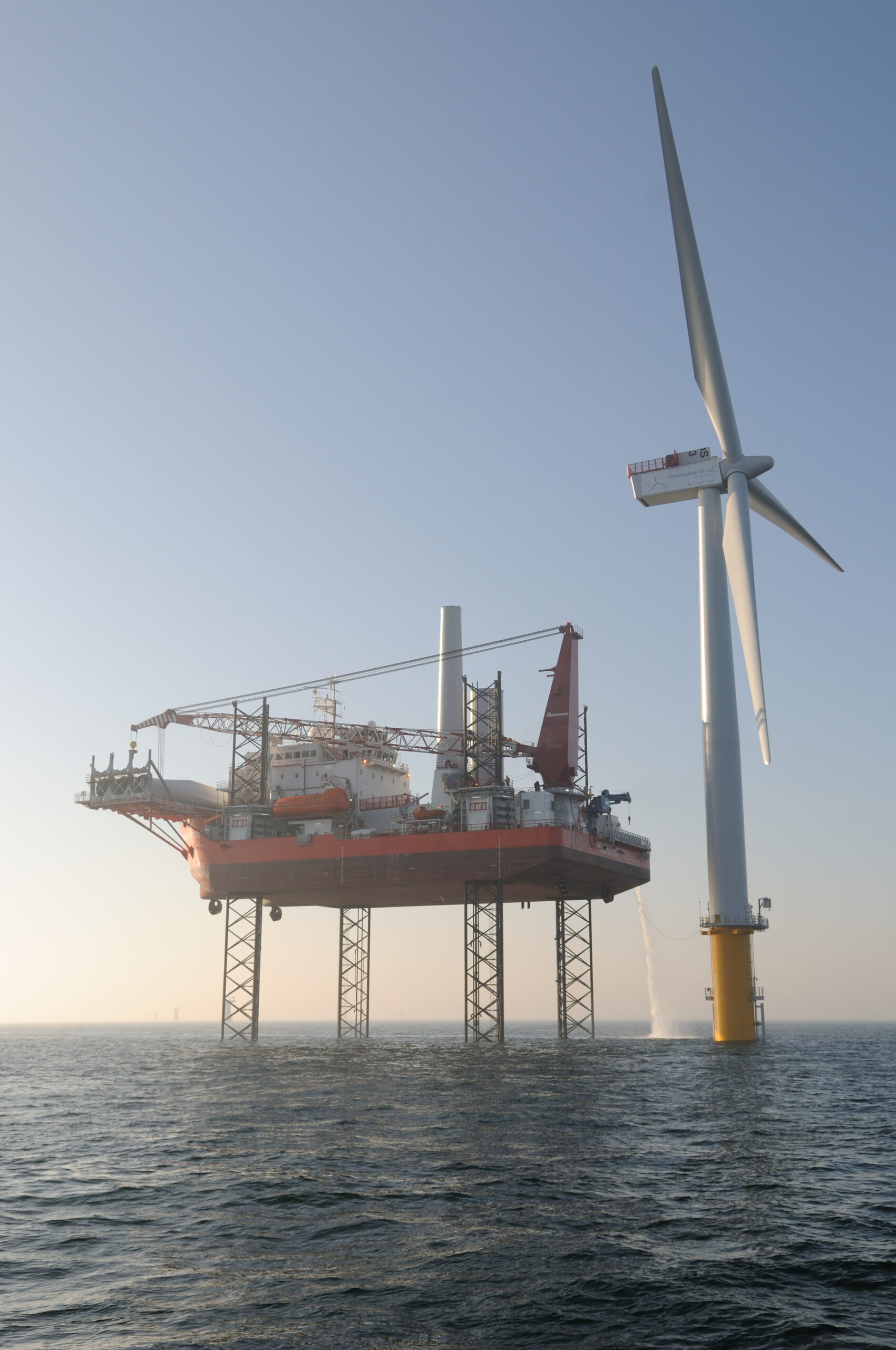
The two most important are Sheringham Shoal and Dogger Bank, both located on the UK continental shelf. In 2005, Hydro acquired a 50 percent stake in the planned Sheringham Shoal wind farm.[REMOVE]Fotnote: Boon, M. (2022). En nasjonal kjempe: Statoil og Equinor etter 2001 (s. 333). Universitetsforlaget.
The project was carried over to StatoilHydro and completed in 2012.
In January 2010, during the UK’s third offshore wind licensing round, Statoil secured a 40 percent stake in the Dogger Bank project.[REMOVE]Fotnote: Boon, M. (2022). En nasjonal kjempe: Statoil og Equinor etter 2001 (s. 334). Universitetsforlaget. Dogger Bank is being developed in phases and will be the world’s largest offshore wind farm once completed.[REMOVE]Fotnote: Dogger Bank. (U.å.). Hentet fra https://doggerbank.com
Moving too fast—or too slow?
Statoil’s investments in offshore wind have not been insignificant. Although these projects do not come close to matching the returns of oil and gas, the UK subsidies supporting them have effectively channeled British taxpayer money into Norway’s sovereign wealth fund.
Still, as a share of Statoil’s total investments, the commitment to offshore wind was modest. In 2017, Stavanger Aftenblad reported that the company had invested NOK 20 billion in renewables over the previous five years—just 3.6 percent of its total capital expenditures. Environmental groups like Nature and Youth and Greenpeace saw the effort largely as a way for the company to “greenwash” its image.[REMOVE]
Fotnote: Øvrebekk, H. L. (2017, mai 11). Fornybarprosjekter har fått 20 av 550 milliarder. Stavanger Aftenblad, s. 29.
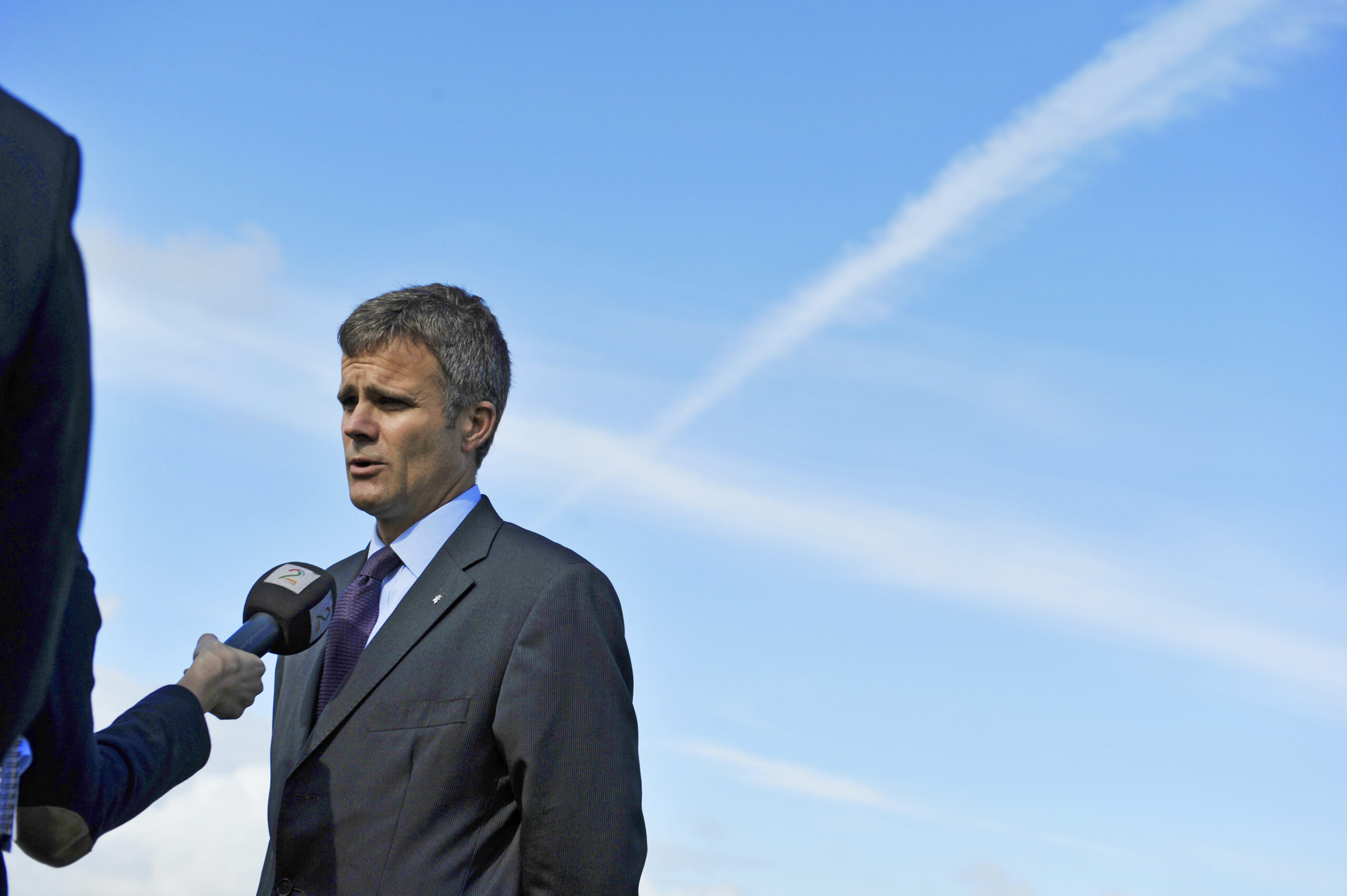
While some criticized the company for moving too slowly, others pointed to the weak profitability of offshore wind and urged a more cautious approach. One of them was Statoil CEO Helge Lund, who, in the summer of 2010, argued that calls for large-scale renewable investments often overlooked the importance of near-term profitability. He warned that while it was easy for others to push for investments in what was currently popular, Statoil would be held responsible if the company spent billions on a project that later proved to be a failure.[REMOVE]
Fotnote: Bjørheim, C., & Sverdrup, I. (2011, januar 4). Rogaland får ikke tak i grønne penger. Stavanger Aftenblad, s. 9.