
Loading and unloading

During the summer months, when the sun barely sets and you can almost see your reflection in the sea’s surface, it’s a good time to be a crane operator. However, when the fog is thick or when winter storms hit and the waves try to push against the underside of the platform deck, it becomes much tougher – even for those who view the platform from a ship’s deck.
The supply ship
“Viking Energy” is a supply vessel that has been transporting supplies to Equinor-operated platforms for over 20 years, including to the Statfjord and Gullfaks fields.
On September 17, 2024, the ship is docked at Mongstad, loading the final containers onboard and loading up with the last bulk load (liquid substances) before it heads out on its regular route to the Gullfaks field.[REMOVE]Fotnote: Parts of the crew on board the ‘Viking Energy’ in conversation with Shadé B. Martins and Julia Stangeland, September 17, 2024. A large part of this section is based on this conversation.
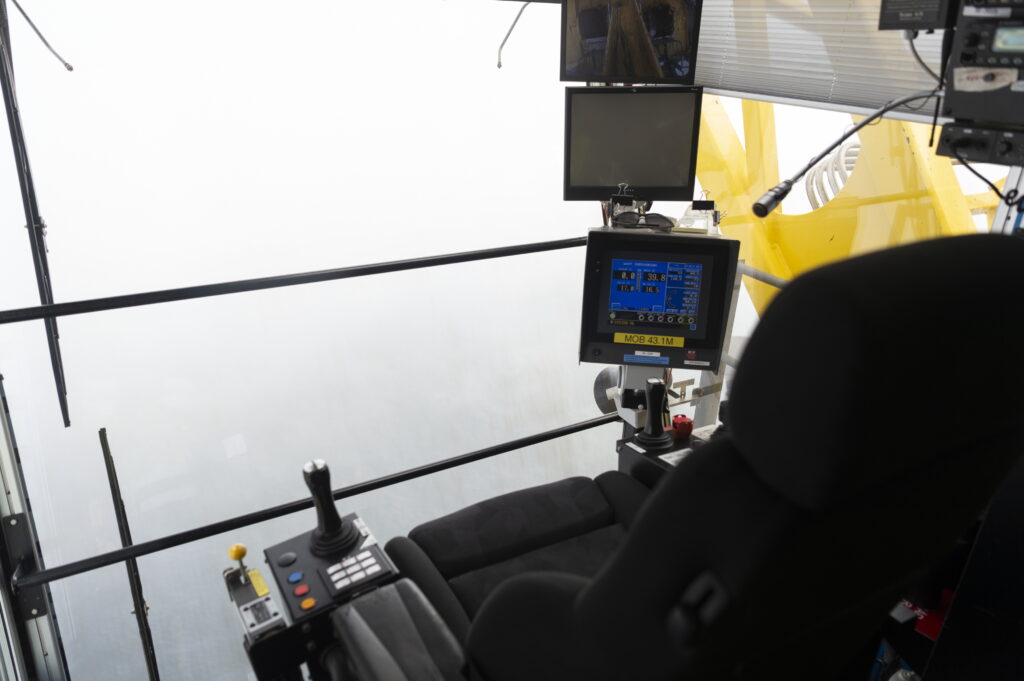
This Eidesvik-owned vessel has a deck capacity of about 1,000 square meters, is 94.9 meters long, and has a deadweight[REMOVE]Fotnote: Deadweight is a unit of measurement for how much weight a ship can carry. The weight includes the cargo itself, fuel, fresh water tanks, ballast, provisions, passengers, crew, equipment, and so on.” Store Norske Leksikon online, “Deadweight”, https://snl.no/d%C3%B8dvekt, downloaded November 15, 2024. of 6,013 metric tons (MT).[REMOVE]Fotnote: https://eidesvik.no/vessels/viking-energy/ Downloaded November 15, 2024. Despite its size, the crew onboard that day consists of only 15 people – in fact, they can manage with just 13.
The crew works on a four-week on, four-week off schedule. Every fourteen days, half the crew disembarks and is replaced by a new crew. This ensures a certain continuity.
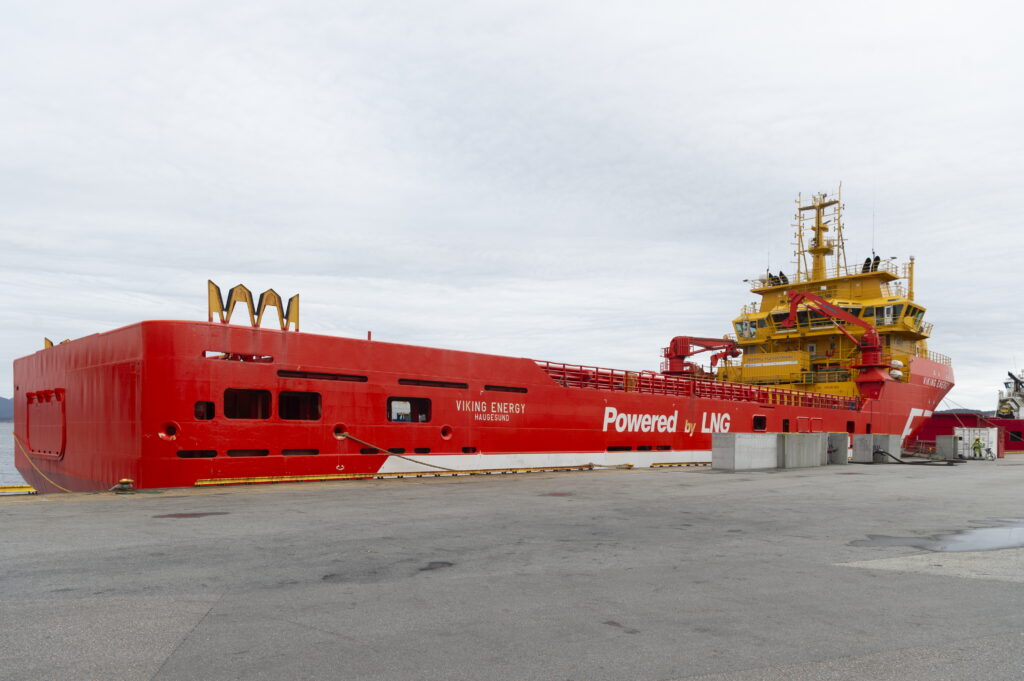
Those on the bridge checking the latest lists that day, mention that “Viking Energy” is well-liked on the Gullfaks field. According to them, the ship sits steadily in the water, making it able to withstand a lot of weather and wind.
If they can position the ship in the shelter of the wind, they can also use the platform for additional protection. Since the platform’s legs are slightly below the platform deck, they can even position the ship just below the deck if necessary. However, bad weather can still be challenging for those who need to connect and disconnect containers from the platform crane.
In the NRK series Oljeriket (The Oil Kingdom), which portrays life aboard Gullfaks C, crane operator Kurt Breivik refers to the deck crew as the last cowboys of the North Sea.[REMOVE]Fotnote: NRK. Oljeriket (The Oil Kingdom). 2005. Episode 6. Loading and unloading is a theme throughout the entire episode. https://tv.nrk.no/serie/oljeriket/sesong/1/episode/PRHO97000604 Downloaded November 15, 2024.
The crew we spoke with on “Viking Energy” emphasizes that it’s the crane operator who feels the worst of the bad weather.
The crane operator
On Gullfaks C, the crane operator sits 85 meters above the sea surface. The crane can lift containers weighing up to 50 tons. The crane operator clearly feels the weight of the container, and if the wind gets too strong, it can become too dangerous to carry out lifts (crane operations).
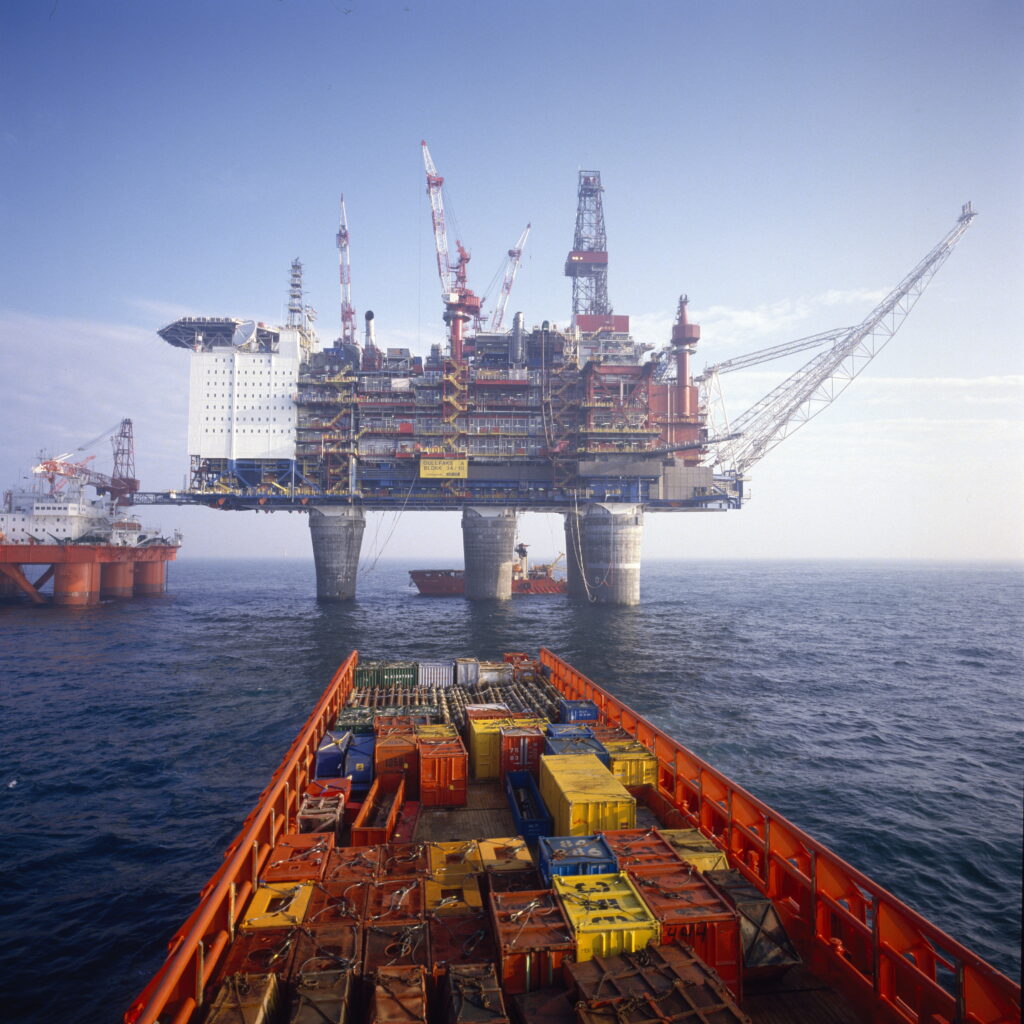
In episode six of Oljeriket (The Oil Kingdom), supply operations are the main topic. Crane operator Kurt Breivik plays a vital part as Gullfaks C receives supplies from “Viking Energy”, which at the time was a relatively new ship. The footage was taken after a storm period, and even that day, the sea was far from calm.
Breivik explains that the most difficult load to transfer from the platform to the ship is the one being sent back.
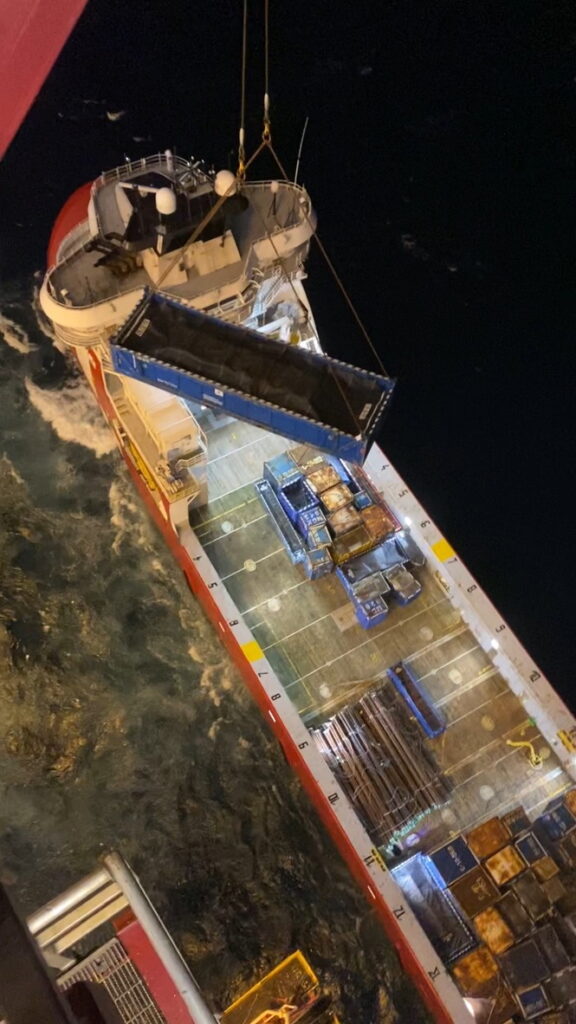
When the boat is rocking in the waves, it becomes difficult to position the heavy containers as straight as possible without crashing into something. In the episode, we see how Breivik almost takes a leap when maneuvering, and how the containers crash into each other as he lowers the return cargo. From his position, several meters above the ship, everything looks tiny. For someone who isn’t a crane operator, it’s almost unbelievable that the containers don’t collide more often.
As Yngvar Nåmdal from the electrical and automation department put it when representatives from the Norwegian Petroleum Museum visited Gullfaks A in June 2024: – It’s only when you see the supply ships on land that you realize how big they actually are. From our perspective, they seem quite small.[REMOVE]Fotnote: Yngvar Nåmdal, electrical and automation, in conversation with Ole Kvadsheim, Shadé B. Martins, and Julia Stangeland, on Gullfaks A, Thursday, June 27, 2024.