
Diving controversy

Statoil initially wanted diving operations at Gullfaks C, Kvitebjørn, and Tordis. According to Statoil, it would be both cheaper and more efficient to use divers instead of underwater robots to carry out repairs, lay new pipes, and perform other necessary tasks on the seabed.[REMOVE]
Fotnote: Stavanger Aftenblad. (2021, 9. februar). Dykkere får flere millioner i erstatning etter ekstremdykk fra norsk skip
In 1991, the maximum depth limit was set to 180 meters. Although deep diving was never formally banned, it was regulated through a consent scheme. Companies could apply to the Petroleum Safety Authority for permission to conduct manned underwater operations deeper than 180 meters and had to document that the proposed dives were safe. For most, there was an understanding that deep diving belonged to the past.
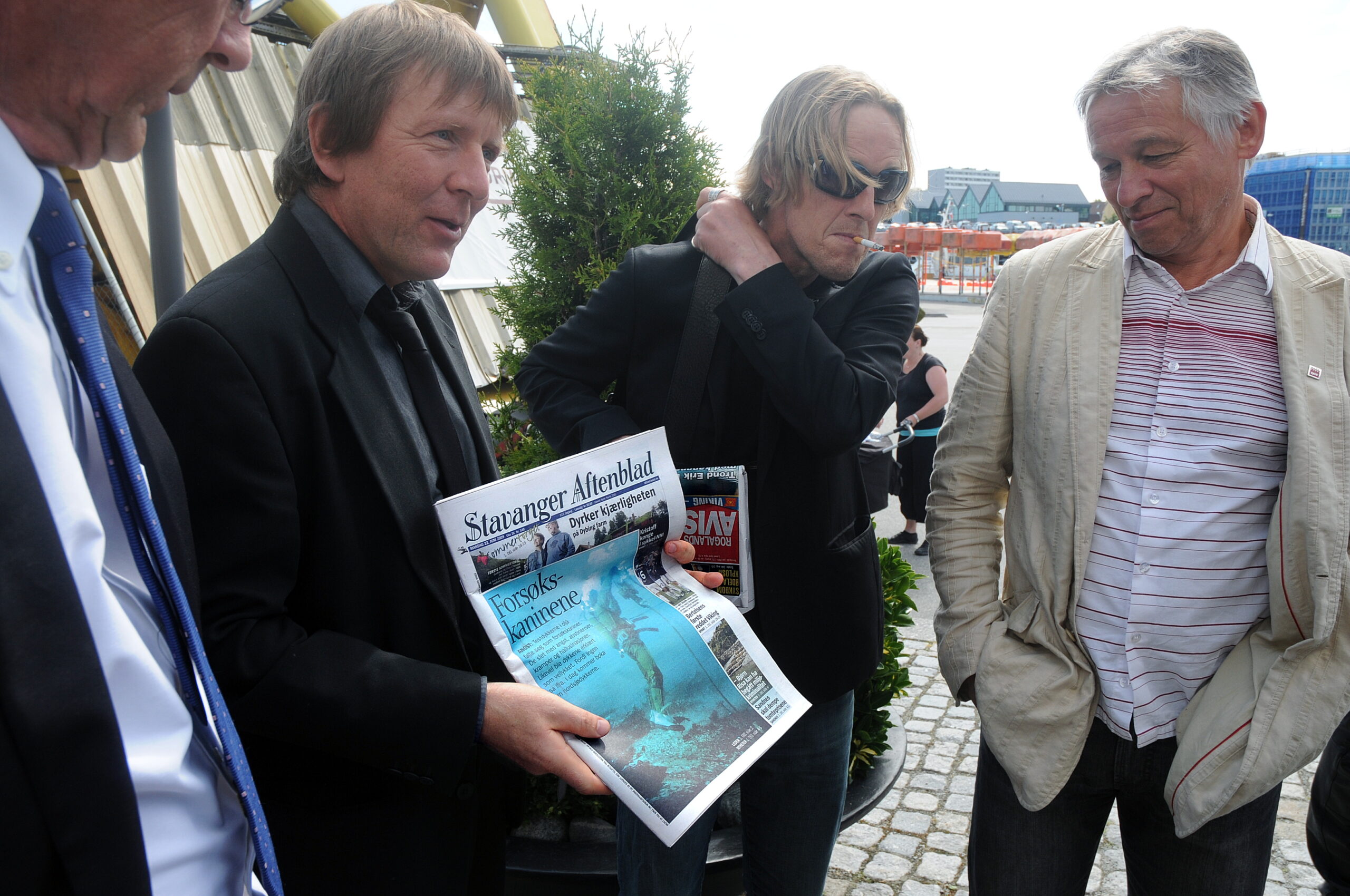
So when Statoil in 2016 again considered resuming the controversial deep diving at Gullfaks, it was, to say the least, controversial. The motive, according to the company’s own statements, was to save money. That caused a stir. The last time divers went deeper than 180 meters on the Norwegian shelf was in 1989, when diving reached 220 meters at Gullfaks C.[REMOVE]
Fotnote: Stavanger Aftenblad. (2016. 14. mai). Statoil vil dykke ned til 225 meter.
A failed verification
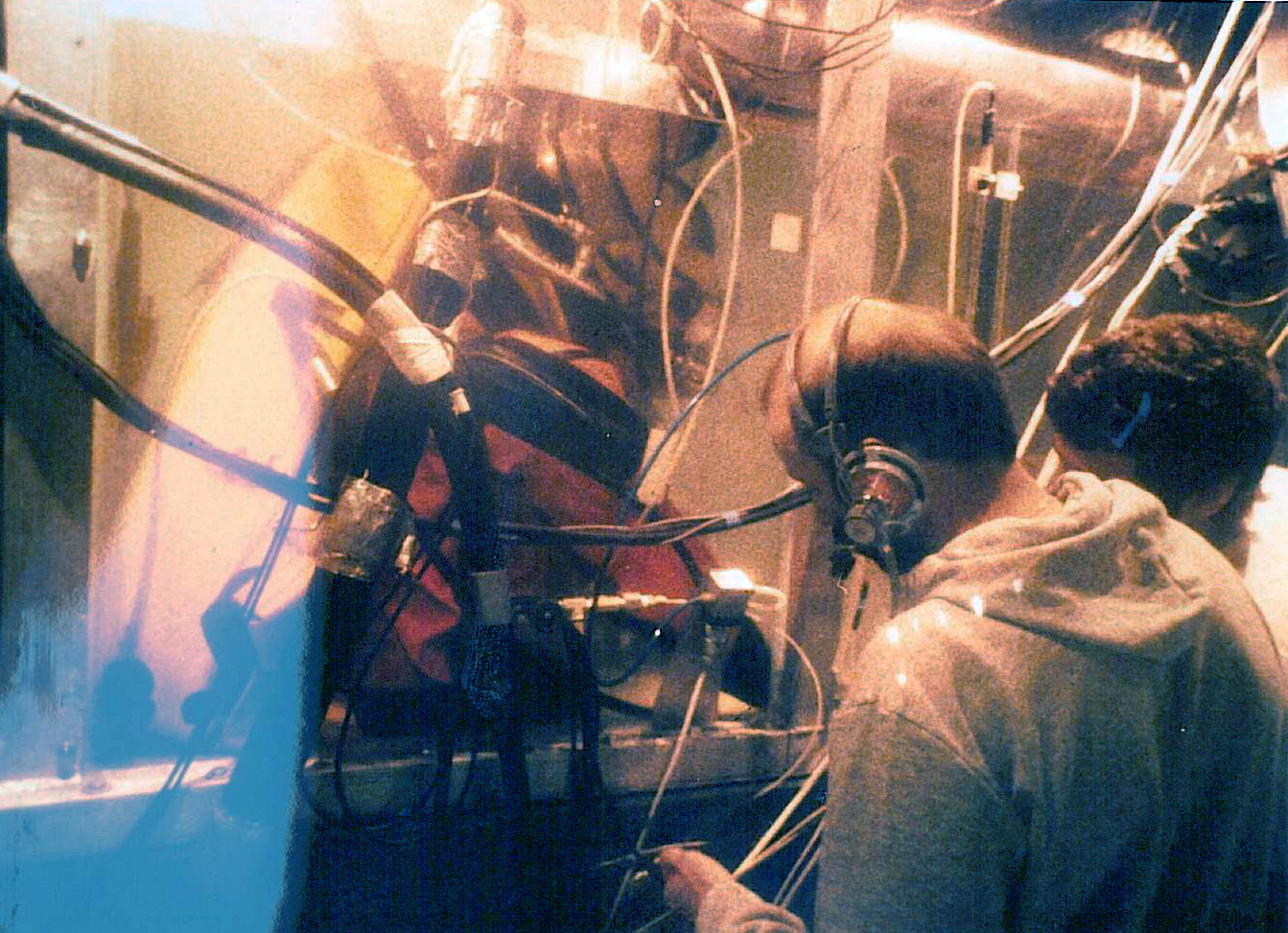
In 2002, several companies believed there was a need for divers at greater depths, and a so-called verification dive was conducted. The purpose was primarily to demonstrate possible diver readiness down to 250 meters. Together with the Norwegian Underwater Institute (NUI), Statoil, Hydro, and Esso organized a dry verification dive in a test chamber. Seven divers and one medical student spent 20 days under pressure equivalent to 250 meters depth to determine whether work at such depths posed any risks.
For six of the eight participants, injuries were later discovered, and only two of the seven divers were able to continue their careers after the dive.[REMOVE]Fotnote: Gjerde, K. Ø., & Ryggvik, Helge. (2014). On the edge, under water: offshore diving in Norway (p. 391). Wigestrand: 343 The dive was so unsuccessful that Statoil imposed an operational limit of 180 meters on itself. The Norwegian Petroleum Directorate also stated that it would not grant permission for deeper dives.
In 2016, Statoil had changed its stance. Now the position was that developments in regulations, procedures, and especially equipment had progressed so far that deep diving once again posed a low risk.
Norway has conducted many extensive studies on the long-term effects on petroleum divers. One of the most important research environments is the Norwegian Centre for Diving Medicine at Haukeland University Hospital in Bergen.
Researchers there strongly warned against expanding the diving limits in Norway. Deep diving was still associated with high risk for divers—especially regarding negative long-term effects.[REMOVE]Fotnote: Stavanger Aftenblad. (2021, 9. februar). Dykkere får flere millioner i erstatning etter ekstremdykk fra norsk skip. A report presented in 2014 indicated that diving itself could cause lasting effects on the nervous system, which in turn could reduce quality of life.[REMOVE]Fotnote: Bergens Tidende. ((2016, 9. juli). Leger skeptisk til Statoil-dykking.
Statoil nevertheless maintained its position and pointed out, among other things, that routine diving to significantly greater depths was taking place elsewhere in the world. Internationally, diving to the depths in question was considered unproblematic.[REMOVE]Fotnote: Bergens Tidende. ((2016, 9. juli). Leger skeptisk til Statoil-dykking.
It was not only Statoil that tried to argue for diving to 225 meters. Pressure to dive deeper than 180 meters was increasing from several companies.
The arguments did not prevail, and after much media attention, the Petroleum Safety Authority chose not to process Statoil’s application. Statoil’s diving ambitions did not materialize.
Continued diving – to 180 meters
In 2024, many dives are still conducted on the Norwegian shelf—both saturation diving and surface-supplied diving. Saturation diving involves the diver working from a diving bell that transports the diver under pressure from a chamber on the vessel to the work site in the sea, but to a maximum of 180 meters. The diver remains under pressure in the chamber on the diving vessel between work shifts.
Surface-supplied diving involves the diver entering the water at the surface, performing the job at the designated work depth (less than 50 meters), and returning to the surface. Additional compression/decompression in a surface chamber may be part of such diving.
In 2023, a total of 111,388 man-hours in saturation diving were reported on the Norwegian and foreign shelves under Norwegian jurisdiction. This corresponds to 326 days where divers were in saturation. Two near-incident events were reported in total.
Use of surface-supplied diving offshore is less common. Here, divers spent only 171 hours in the water. In 2023, no incidents were reported for surface-supplied diving on the Norwegian shelf.[REMOVE]
Fotnote: Rapport fra havindustritilsynets dykkedatabase dsys – 2023. Rapport fra DSYS (havtil.no)