
“Jøllehallen”

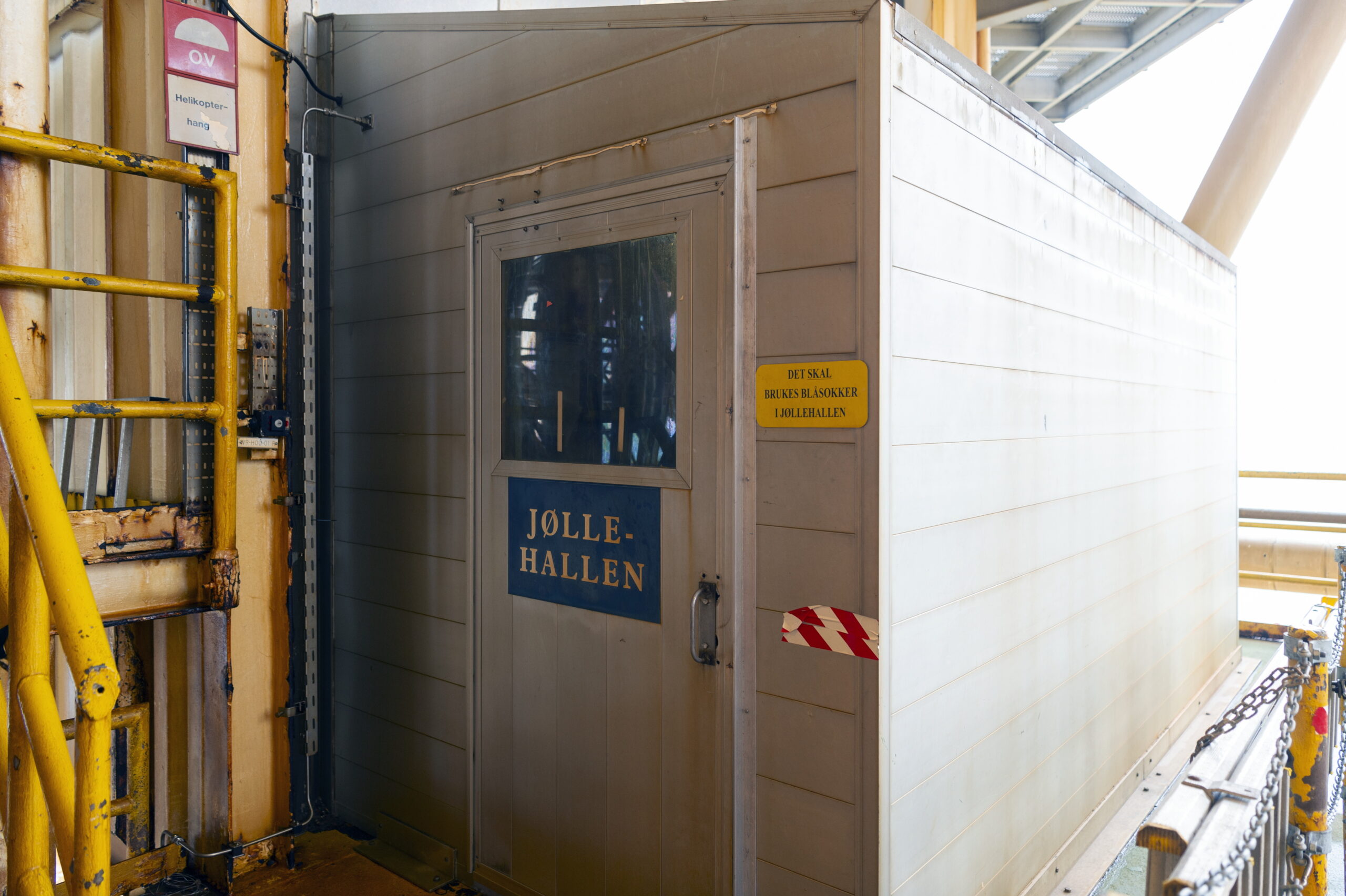
On the Gullfaks A platform, alongside a comprehensive fitness center, there is a small gymnasium where employees can engage in activities ranging from floorball to football and squash. This gym, known as “Jøllehallen,” was originally designed to serve as a helicopter hangar.
A Repurposed Hangar
Under the helideck on Gullfaks A, a hall was constructed to serve as a hangar for helicopters on standby for emergency response. Similar to Statfjord B, located a few kilometers northeast, Gullfaks A was intended to house helicopters ready to respond swiftly to crises.
In 1983, Oil Industry Services, based in Kristiansand, was contracted to build the helideck, including its support structure, elevator, and hangar.[REMOVE]Fotnote: Status: internavis for Statoil-ansatte. (1983). Nr. 16, s. 10-11. While the work was completed as agreed, there was a significant issue: the hangar was too small to accommodate SAR (search and rescue) helicopters. As a result, it was never used operationally as intended.
From Hangar to Sports Hall
When Gullfaks A began production, it became clear that Gullfaks C would be constructed as a near replica of Gullfaks A, but with a larger hangar capable of housing SAR helicopters. This left the Gullfaks A hangar available for alternative uses.
Sten Atle Jølle, an electrician and welfare manager on Gullfaks A at the time, proposed converting the space into a sports hall. Initially, Jølle and his colleagues used the hangar for badminton. With some modifications, it was soon adapted for various activities, including floorball, football, basketball, and squash—one of Jølle’s personal favorites.
Using a bold approach, Jølle announced that funds for insulation and heating cables had been approved by the platform manager, securing enough witnesses to make any reversal difficult. The work, however, would proceed on a volunteer basis.
Building Bonds Through Volunteering
Jølle organized the renovation as a collaborative project, forming mixed teams of volunteers from various departments. This approach broke down departmental silos, fostering new relationships across the platform. Interestingly, contractors—employees of external companies—were some of the most enthusiastic participants.
The project not only saved costs but also strengthened the platform’s social cohesion. Jølle noted that the initiative was one of Statoil’s most budget-friendly projects, with free labor and materials sourced at minimal expense.
The Naming of Jøllehallen
By 1990, the hall was ready for use and was initially named “Gullfakshallen.” However, during Jølle’s next shift break, colleagues secretly replaced the sign with one bearing the name “Jøllehallen.” The name has stuck ever since.[REMOVE]Fotnote: Olsen, T. (2023, 24. juli). Livet til Equinor-tillitsvalgt Sten Atle Jølle er fylt av mye moro, men nå er det noe som plager ham. Stavanger Aftenblad. https://www.aftenbladet.no/magasin/i/zGywP1/livet-til-equinor-tillitsvalgt-sten-atle-joelle-er-fylt-av-mye-moro-men-naa-er-det-noe-som-plager-ham
A Lasting Legacy
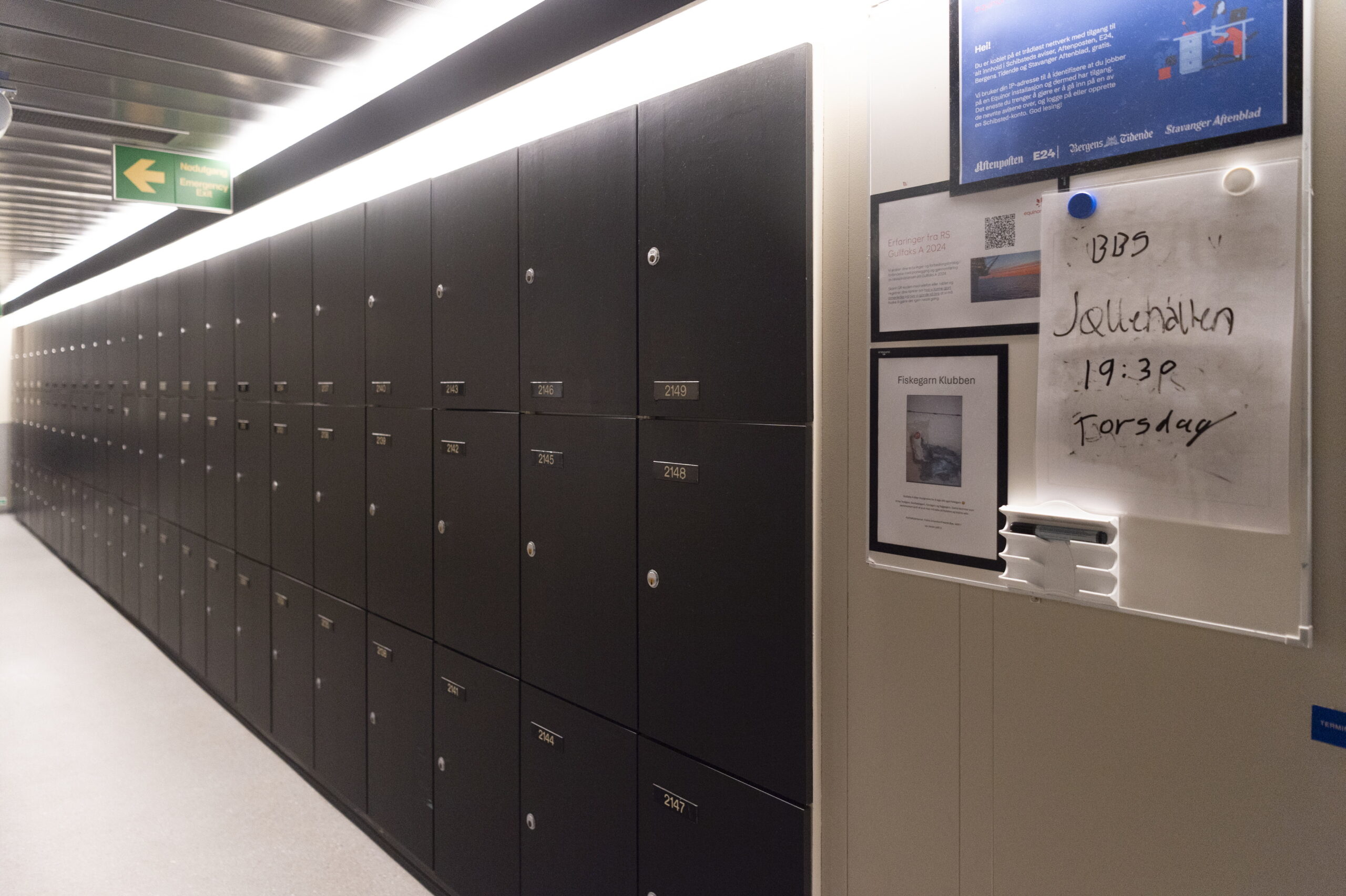
Jøllehallen has since become a hub for activities like football, squash, basketball, and volleyball. Employees have organized tournaments, complete with trophies for the winners.
Occasionally, injuries occur during these activities, and workplace accident reports have humorously coined the term “Jølleskader” (“Jølle injuries”). This quirky legacy even puzzled office staff at Sandsli until Jølle himself clarified its origins.
This article is based on information provided by Sten Atle Jølle in an interview with Ole Kvadsheim on August 7, 2024.